青少年是伴随AI成长的第一代人,这项技术将深刻塑造他们的未来。如今,近九成使用ChatGPT的青少年在一周内会用它来学习、获取信息、培养技能或提升效率。正因如此,我们坚信让青少年接触AI至关重要。若禁止他们在成年之前使用AI,无异于要求前一代人直到18岁才能接触互联网或搜索引擎,这会使他们更难掌握所处时代最具标志性的技术之一。但接触AI的同时,必须配备专为青少年设计的保护措施。
在最近的一次OpenAI学院(在新窗口打开)活动中,Oriana McKenzie分享了ChatGPT如何帮助她通过更高效的学习和任务管理成为高中班级第一名——这为她热爱的体育和校园活动腾出了时间。她的故事展现了青少年在AI辅助下学习与创造的可能性。
为了最大化这些收益,青少年需要针对其成长阶段设计的更强保护措施,包括自动防护栏,让他们在自信探索、学习和创造的同时,获得符合年龄的安全保障。随着AI能力不断增强,我们的责任是将广泛接触与适龄保护相结合,让青少年能随着技术发展持续受益。
过去一年里,这意味着加强青少年默认保护措施、推出年龄预测、扩展家长控制、创建更多家庭资源(在新窗口打开)以帮助家长引导健康负责任的使用,并引入学习功能以促进深度理解,而非仅仅提供答案。
- 我们将青少年安全置于首位,即使这可能与其他目标冲突。
- 我们鼓励在需要时寻求现实世界的支持。
- 我们以对待青少年的方式对待他们。
- 我们通过明确预期保持透明。
为学习而构建,而非仅提供答案
学习是青少年从AI获益最明显的途径之一,因此我们正在构建鼓励主动参与、批判性思维和深度理解的工具。学习模式(在新窗口打开)由教师、学习科学家和教育学专家共同设计,通过引导性问题、结构化解释和反思机会,帮助学生逐步解决问题,而非直接给出答案。对学习模式等工具的早期评估已显示出学生成绩的积极提升,这为我们研究AI如何支持学习成果提供了更广泛的参考。
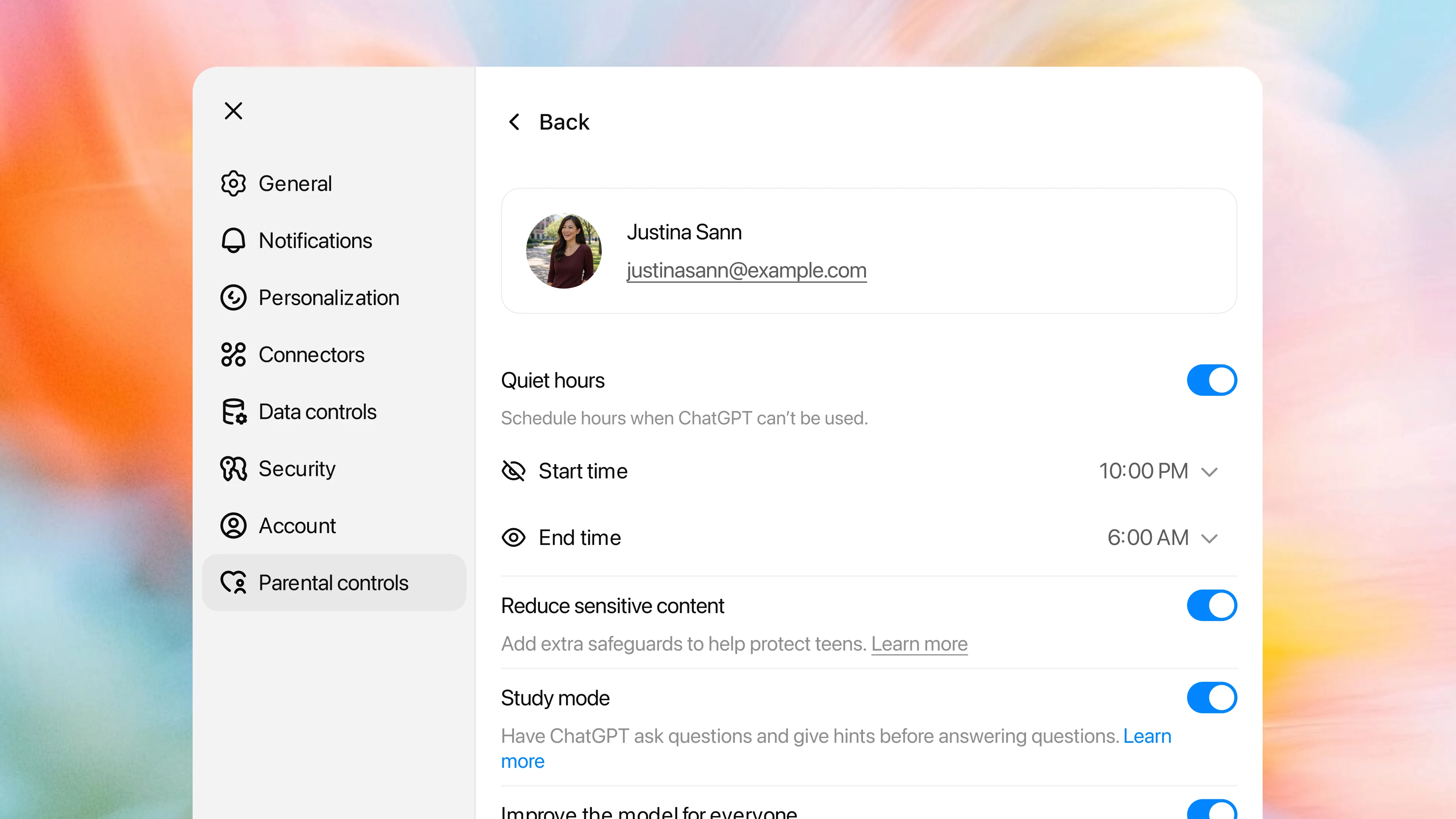
虽然青少年可以自行开启此模式,但现在拥有关联青少年账户的家长可以直接从家长控制中开启学习模式。启用后,每当青少年开始新对话时,该模式将默认开启,为家庭提供另一种引导ChatGPT用于课业学习的方式。
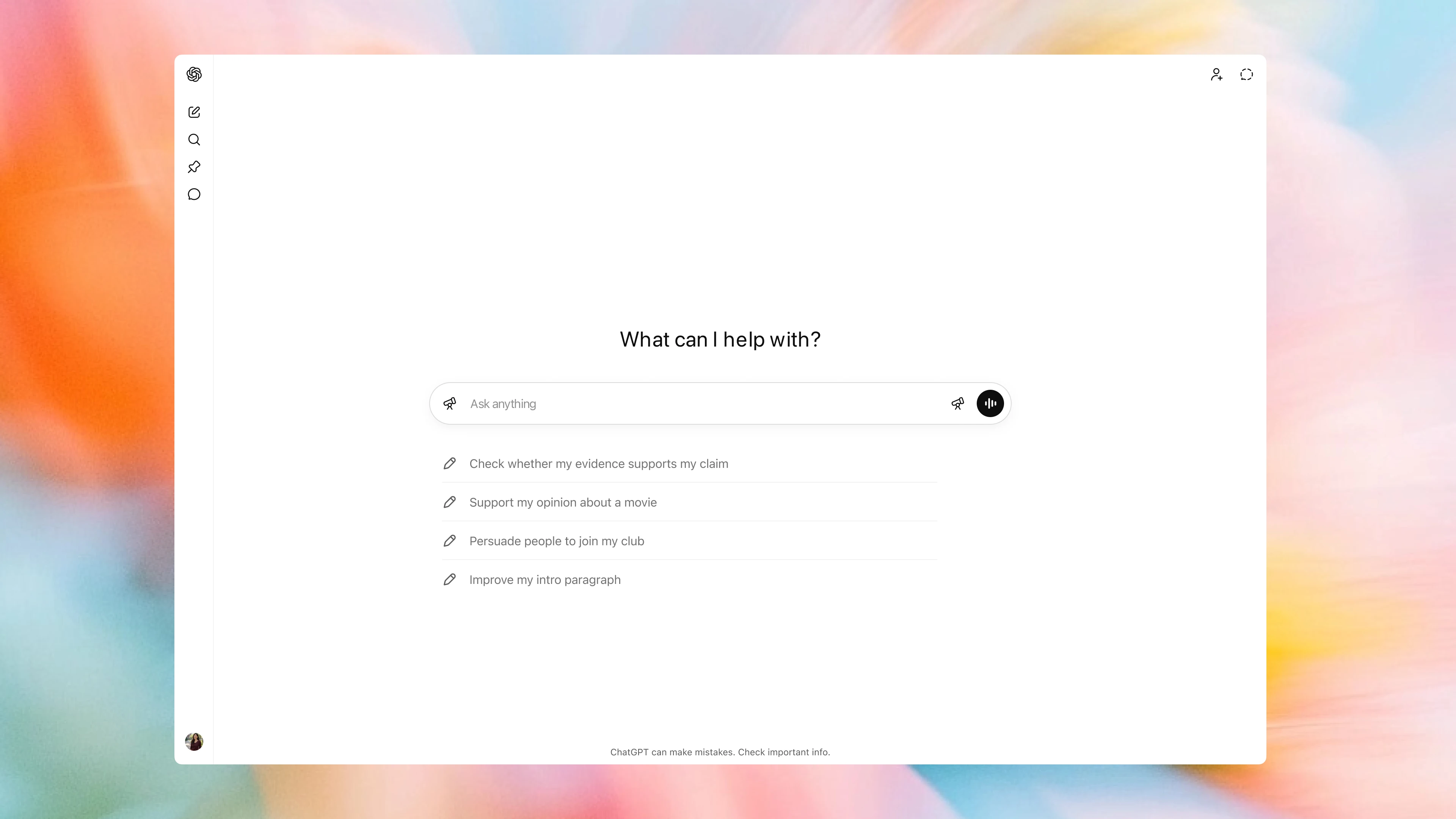
我们还最近为青少年推出了教育导向的起始提示,使他们能更轻松地开始任务,例如将主题分解为简单步骤、将笔记转化为学习指南、创建闪卡或练习题,以及检查证据和清晰度。
我们也在持续扩展互动学习体验。研究一致表明,当人们能主动参与概念而非被动接收信息时,学习效果更佳。自今年早些时候推出以来,每周已有1800万用户使用ChatGPT中的互动数学和科学体验,我们将这些体验扩展至超过300个主题,涵盖积分、有丝分裂、月相、光合作用等。我们还引入了发音体验,利用音频帮助用户学习超过61种语言的单词发音。
通过内置防护措施保护青少年
如果我们的系统估计使用ChatGPT的用户未满18岁,我们将自动提供更适龄的体验(在新窗口打开)。青少年仍可使用ChatGPT学习、创造和探索,但会配备额外保护措施,以减少接触可能不适合他们的内容。这包括针对暴力画面、自残行为、危险病毒式挑战、不健康身体形象内容以及危险、浪漫或性角色扮演的更强防护。我们的核心目标是确保ChatGPT始终作为学习和创造的工具,而非现实人际关系的替代品。
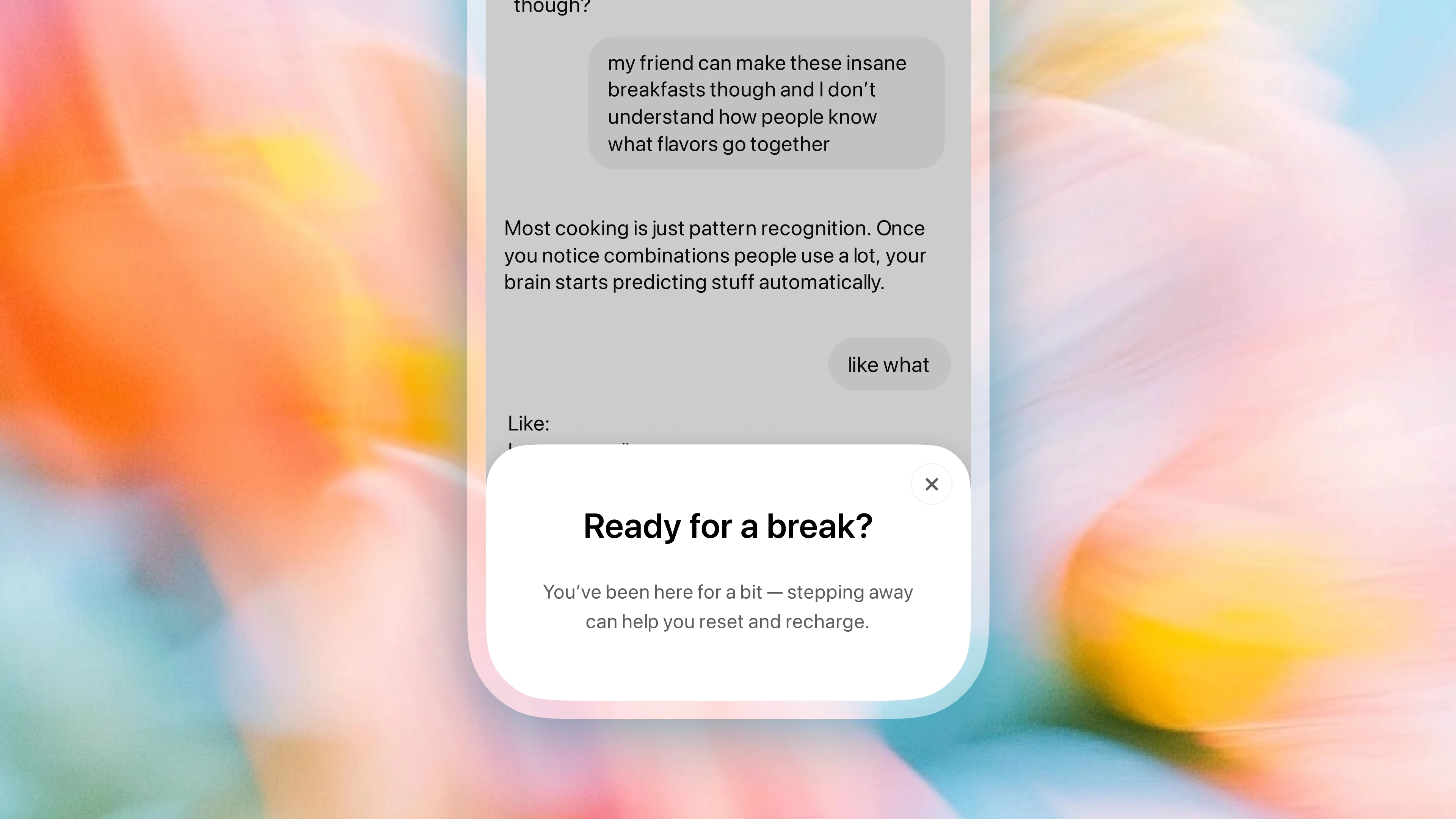
我们还在设计ChatGPT以鼓励健康习惯。长时间使用ChatGPT的青少年将收到更频繁的休息提醒,鼓励他们暂停并离开屏幕。这些提醒旨在帮助年轻人建立平衡的技术使用习惯,同时保留他们使用AI进行学习、创造和解决问题的自由。
我们相信,最佳的安全工具能帮助家庭共同引导青少年的在线体验。我们构建了家长控制和通知功能,允许他们设置静音时段、关闭语音模式、管理图像生成权限,并在某些高风险情况(如潜在自残迹象)下接收通知。
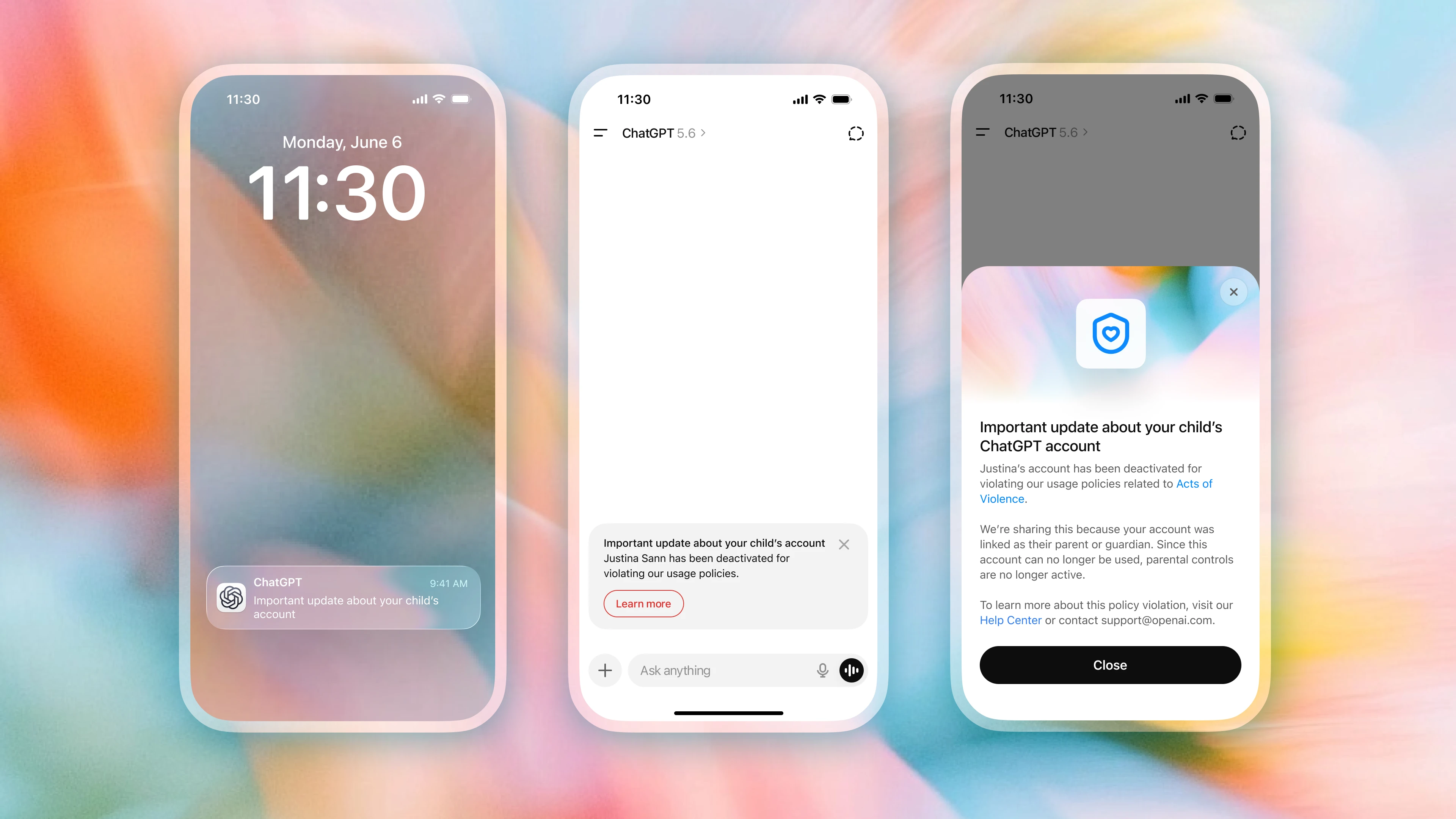
我们正在扩展这些通知,以涵盖关联青少年账户因违反我们的使用政策(涉及暴力威胁或网络暴力行为)而被停用的情况。这一方法有助于家长了解何时发生了严重事件,同时尊重青少年的隐私,并鼓励线下沟通与支持。
在开发这些功能时,我们咨询了多位专家,包括Moonshot(在新窗口中打开)——一家在预防网络暴力领域处于领先地位的组织,以确保这些干预措施经过深思熟虑、切实有效,并专注于帮助家庭在需要时做出应对。
与外部专家、组织、开发者和监管机构合作
保障青少年在线安全并非任何一家公司能独自解决的问题。我们与青少年、家长、教育工作者、儿童安全专家、心理健康专业人士、研究人员、政府及民间社会组织紧密合作。这些合作关系帮助我们更好地理解年轻人的需求,识别新兴风险,评估我们安全措施的有效性,并确保我们的政策基于独立专业知识。
今年,我们还加入了家庭在线安全研究所(在新窗口中打开)(FOSI),这是一个长期倡导为家庭和年轻人提供安全在线体验的机构。我们将共同努力,确保年轻人能够从人工智能中受益,并以赋能家长和负责任的行业实践为核心。我们希望这一合作能有助于推动对有效方法的共识,加强适龄保护和家长工具,并支持全行业的努力,使年轻人能够安全、负责任地受益于人工智能。
展望未来
保护青少年在线安全需要持续进步。在未来几个月,我们将继续加强适龄保护措施,为家长提供更多工具和控制权,改进针对严重危害的安全防护,推进关于健康使用人工智能的研究,并打造更多帮助青少年积极学习、自信使用人工智能的体验。
我们深知仍有更多工作要做,并致力于与全球的青少年、家长、教育工作者、专家和社区持续合作,为青少年提供安全、广泛的访问机会。
Teens are the first generation growing up with AI, and this technology will heavily shape their future. Today, nearly 9 in 10 teens on ChatGPT use it for learning, information, skill-building, or productivity in a single week. This is why we believe it’s critical for teens to have access to AI. Keeping teens from using it until adulthood would be like asking a previous generation to avoid the internet or search engines until they turned 18, leaving them less prepared to use one of the defining technologies of their time. But access must be paired with protections designed specifically for teens.
During a recent OpenAI Academy(opens in a new window) Oriana McKenzie shared how ChatGPT helped her become No.1 in her high school class by studying smarter and managing her workload—giving her the time needed for the sports and school programs she loves. Her story illustrates what’s possible when teens have access to AI that helps them learn and create.
To maximize those gains, teens need stronger protections designed for their stage of life, including automated guardrails that let them explore, learn, and build with confidence, while providing safeguards tailored to their age. As AI becomes more capable, our responsibility is to combine broad access with age-appropriate protections that allow teens to benefit from this technology as it evolves.
Over the past year, that has meant strengthening default protections for teens, rolling out age prediction, expanding Parental Controls, creating additional family resources(opens in a new window) to help parents support healthy, responsible use, and introducing learning features to help support deeper understanding rather than just providing answers.
- We put teen safety first even when it may conflict with other goals.
- We encourage real-world support in times of need.
- We treat teens as teens.
- We are transparent by setting clear expectations.
Building for learning, not just answers
Learning is one of the clearest ways teens benefit from AI, so we’re building tools that encourage active engagement, critical thinking, and deeper understanding. Study Mode(opens in a new window) was designed in collaboration with teachers, learning scientists, and pedagogy experts to help students work through problems step by step using guiding questions, structured explanations, and opportunities for reflection without simply providing the answer. Early evaluation of tools like Study Mode has shown promising gains in student performance, helping inform our broader research into how AI can support learning outcomes.
While teens can turn this mode on themselves, now parents with linked teen accounts can turn on Study Mode directly from Parental Controls. When enabled, it is on by default whenever a teen starts a new chat, giving families another way to guide how ChatGPT is used for schoolwork and study.
We also recently introduced education-focused starter prompts for teens so it is easier to begin with tasks like breaking down a topic into simple steps, turning notes into a study guide, creating flashcards or practice questions, and checking evidence and clarity.
We’re continuing to expand interactive learning experiences as well. Research has consistently shown that people learn more effectively when they can actively engage with concepts rather than passively consume information. Since launching earlier this year, 18 million weekly users now engage with interactive math and science experiences in ChatGPT, and we’ve expanded those experiences to more than 300 topics total from integrals and mitosis to moon phases, photosynthesis and more. We also introduced a pronunciation experience that uses audio to help people learn how to pronounce words in more than 61 languages.
Protecting teens with built-in safeguards
If our system estimates someone using ChatGPT is under 18, we automatically provide a more age-appropriate experience(opens in a new window). Teens can still use ChatGPT to learn, create, and explore, but with additional protections designed to reduce exposure to content that may not be appropriate for them. That includes stronger safeguards around graphic violence, self-harm, risky viral challenges, unhealthy body-image content, and dangerous, romantic, or sexual roleplay. The North Star is to help ensure ChatGPT remains a tool for learning and creativity and not a substitute for real-world relationships.
We’re also designing ChatGPT to encourage healthy habits. Teens who spend extended time in ChatGPT will now receive more frequent break reminders that encourage them to pause and step away. These reminders are intended to help young people build balanced technology habits while still giving them the freedom to use AI for learning, creativity, and problem-solving.
We believe the best safety tools can help families navigate teens’ online experiences together. We built parental controls and notifications that allow them to set quiet hours, turn off voice mode, manage access to image generation, and receive notifications in certain high-risk situations, such as indications of potential self-harm.
We’re expanding those notifications to include cases where a linked teen account has been deactivated for violating our usage policies on violent threats or acts of violence online. This approach helps parents know when something serious has happened while respecting teens’ privacy and encouraging conversations and support offline.
As we developed these features we consulted with several experts, including Moonshot(opens in a new window), a leader in preventing online violence, to help ensure these interventions are thoughtful, effective, and focused on helping families respond in times of need.
Working with outside experts, organizations, developers and regulators
Keeping young people safe online isn’t something any one company can solve alone. We work closely with teens, parents, educators, child safety experts, mental health professionals, researchers, governments, and civil society organizations. These partnerships help us better understand the needs of young people, identify emerging risks, evaluate the effectiveness of our safeguards, and ensure our policies are informed by independent expertise.
This year, we also joined the Family Online Safety Institute(opens in a new window) (FOSI), a long-standing advocate for safe online experiences for families and young people. We will work together to ensure young people can benefit from AI, with empowered parents and responsible industry practice at the center. We hope this partnership will help advance shared understanding of what works, strengthen age-appropriate protections and parental tools, and support industry-wide efforts that enable young people to benefit from AI safely and responsibly.
Looking ahead
Protecting young people online requires continuous progress. In the coming months, we’ll continue strengthening age-appropriate protections, giving parents more tools and control, improving safeguards against serious harms, advancing research on healthy AI use, and building more experiences that help teens learn actively and use AI with confidence.
We know there is more to do, and we’re committed to continuing our work in collaboration with teens, parents, educators, experts, and communities worldwide to bring safe broad access to teens.
本文内容采集自官方网站,排版和翻译可能与原页面存在差异。
阅读官方全文